Selected Work
Proof, not
a portfolio of pretty.
Three businesses that were already excellent at what they do — and were being underestimated online. Here is what was in the way, what I built, and why it works.
Where I work
Hospitality, events, and service brands that are judged on presentation.
Built on
Custom WordPress — yours to own, yours to update.
Included in every project
Positioning, identity, copy, photography direction, launch.
Led by
A working creative director — not a template and not a queue.
Case Study 01
Fabrication Events
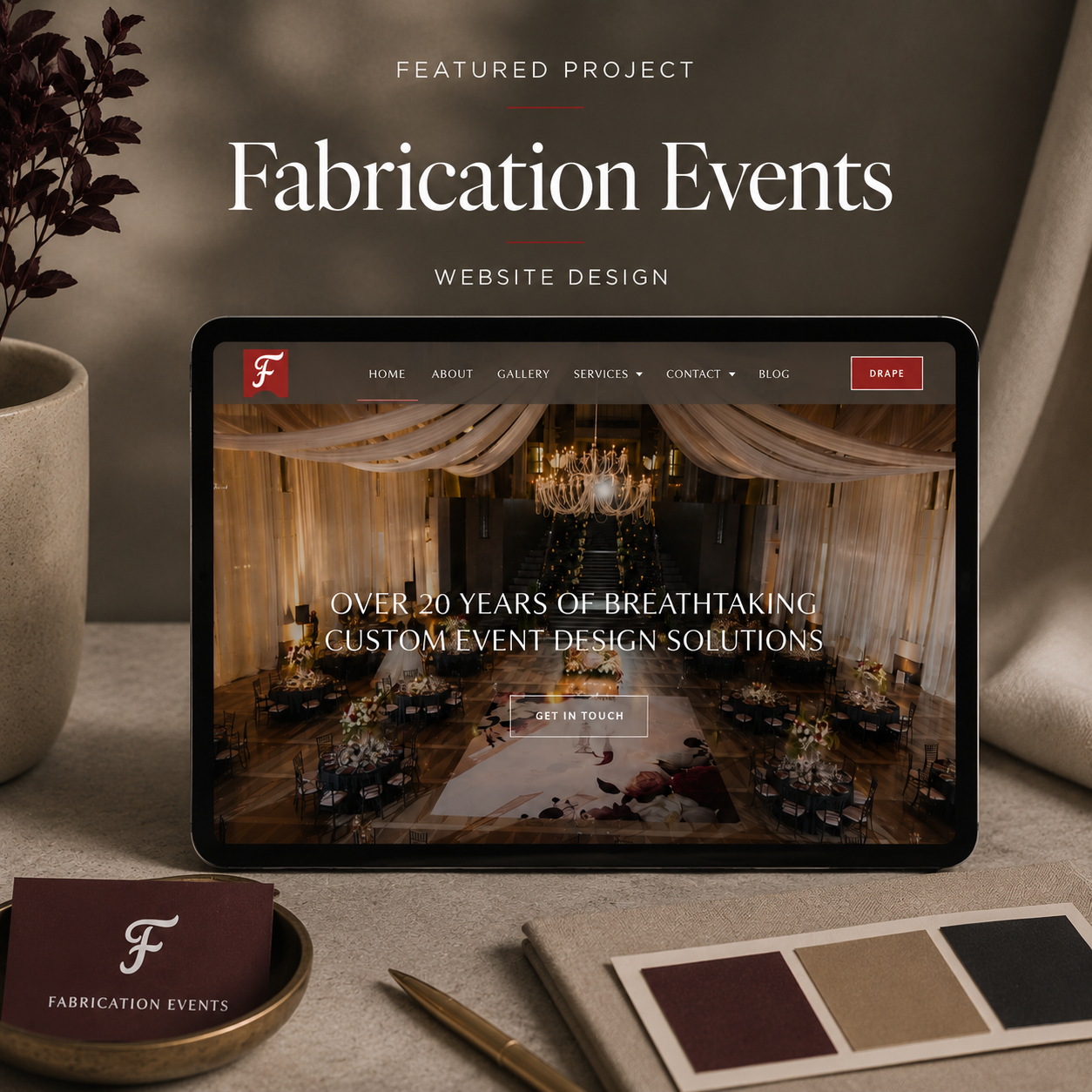
Two decades of the region's most ambitious installations — finally in one place, and finally selling design instead of inventory.
The Challenge
Fabrication has been building the region's most ambitious event environments since 2000 — drape, staging, dance floors, custom scenic — for venues where nothing is allowed to look improvised. But the site read like a rental list, not a design partner. Worse, it asked two very different people to walk through the same door: the client hiring them to design an entire room, and the industry pro who needs four hundred feet of ivory drape by Friday.
What I Built
One homepage, two clear paths. The hero leads with an installed room — the thing they actually sell — with the rental catalog one deliberate click away and a wishlist so industry pros can self-serve without a phone call. Services split into the five things people genuinely search for: drape and fabric, furnishings and bars, dance floors, staging, backdrops. The gallery was rebuilt as the proof engine rather than an afterthought.
Why It Works
In event design the sale happens in the first three seconds of looking at a room. Every decision here protects that moment: a dark ground so the light in the photography carries, generous negative space, imagery big enough to feel like standing in the room. Twenty years of credibility is stated once, plainly, and then demonstrated for the rest of the site.
A site that positions Fabrication as a design partner first and a rental house second — and lets the trade side of the business run itself.
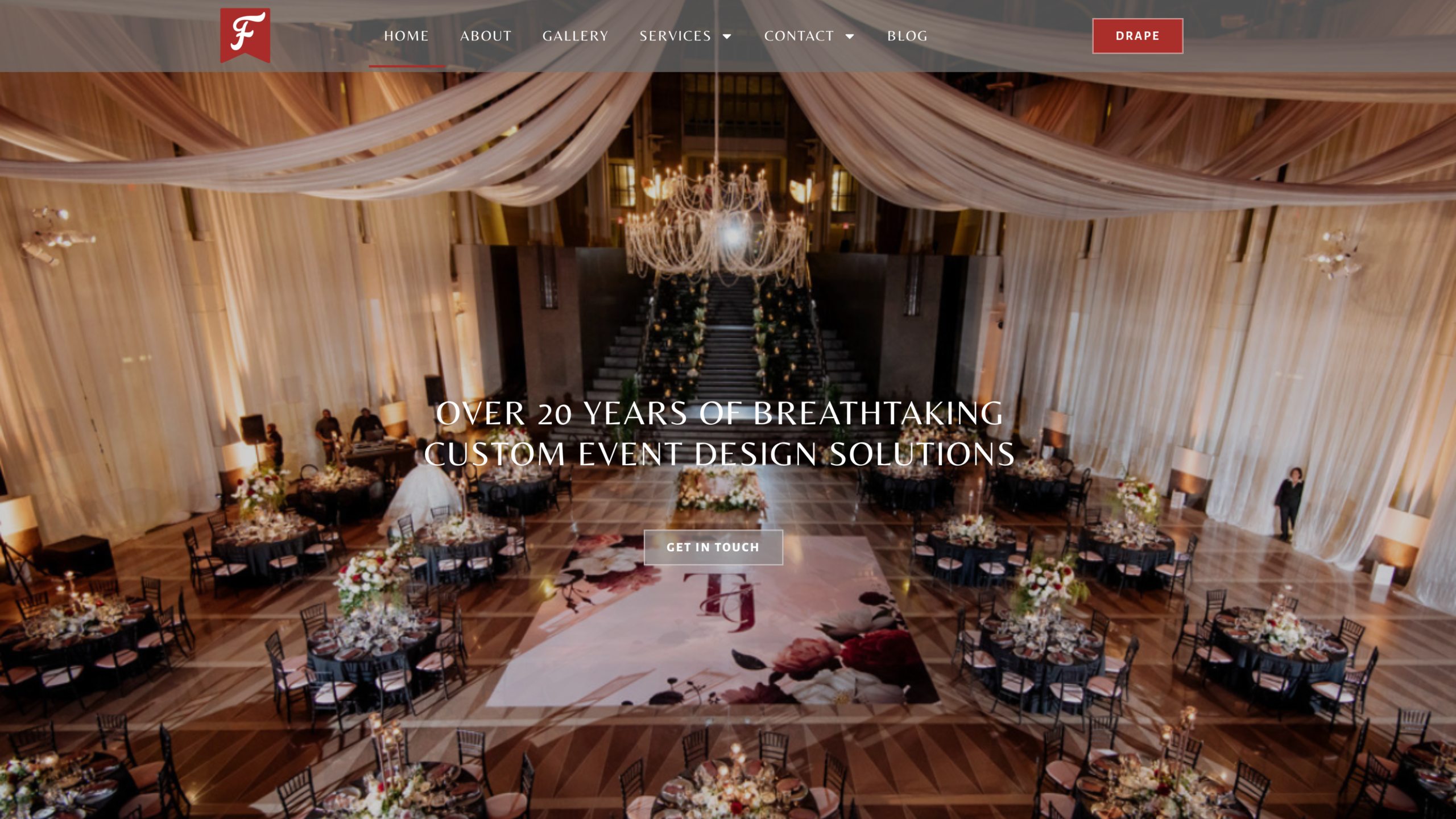
Homepage — the room leads
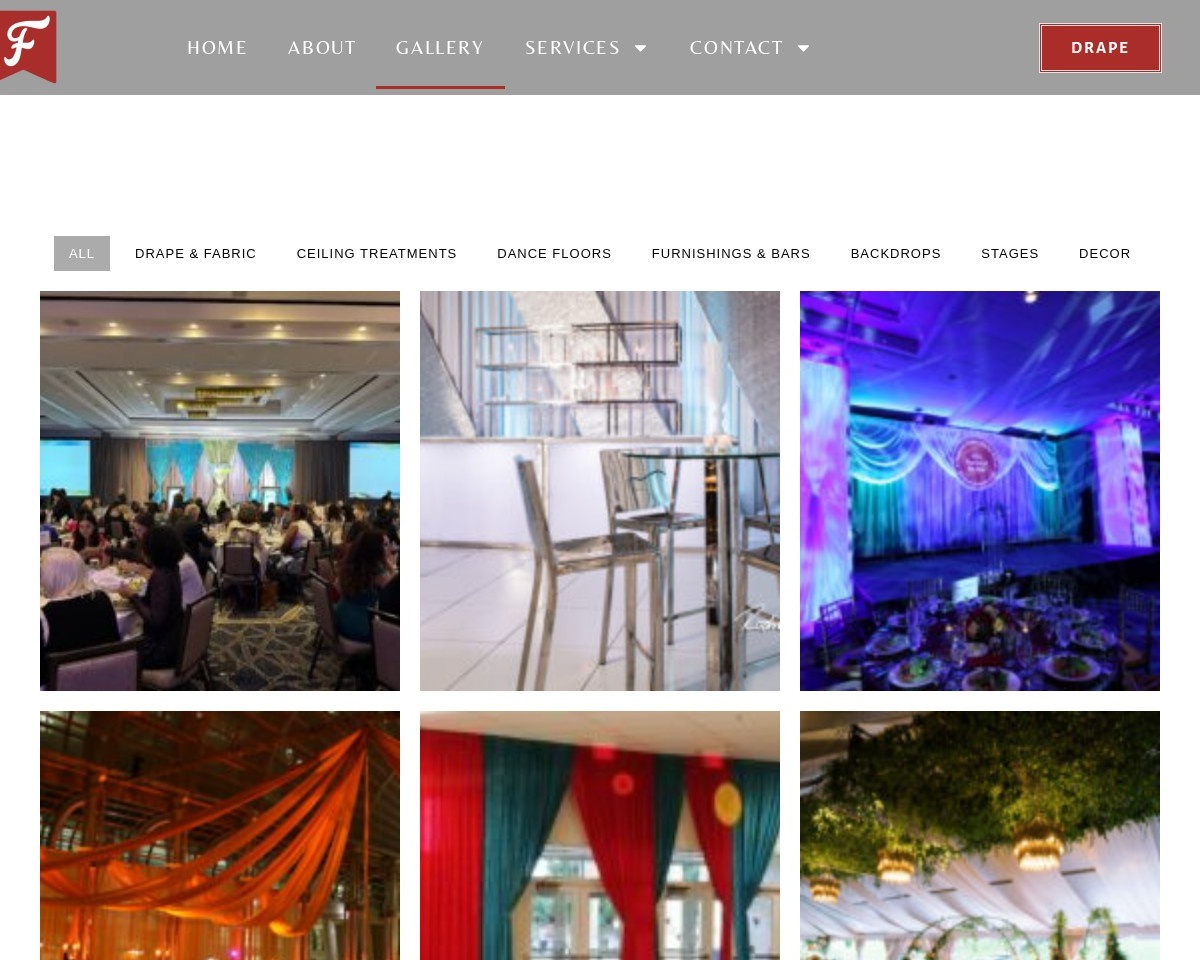
Gallery — the proof engine
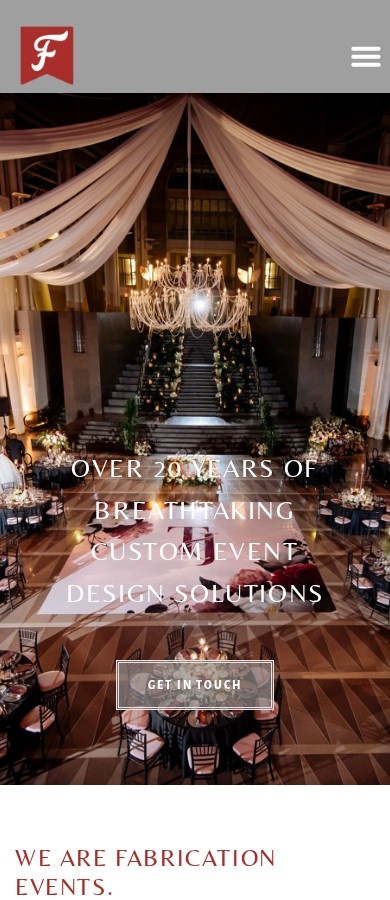
Mobile — catalog in hand
Case Study 02
Belmont 205
Taking a luxury oceanfront rental off the platforms and onto a front door of its own.
The Challenge
The property was performing — on Airbnb and VRBO, where every listing looks like every other listing, commission comes off the top of every stay, and the guest belongs to the platform rather than the owner. Guests who loved the place and wanted to come back had nowhere to go except back through a booking fee.
What I Built
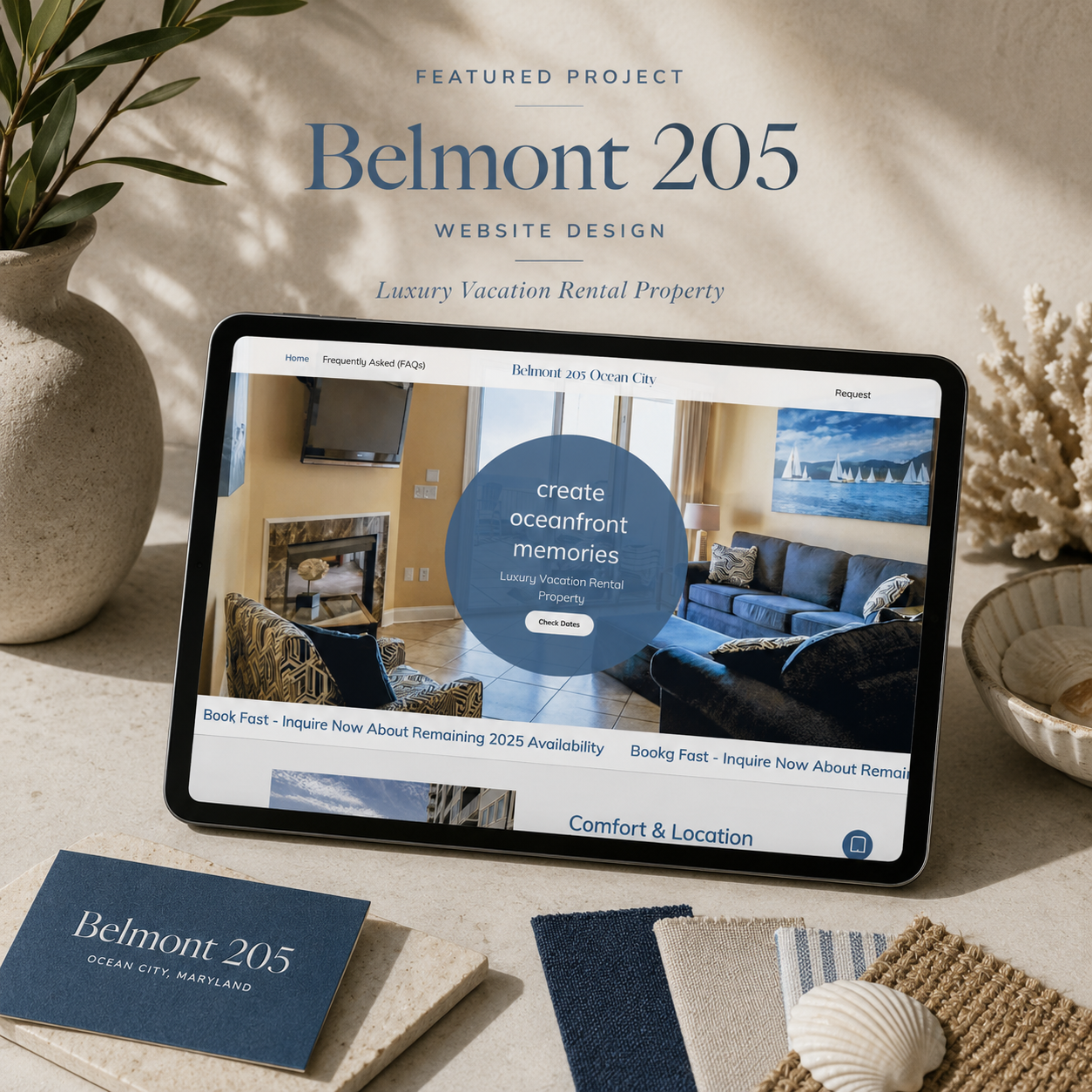
A brand of its own, then a site to hold it. Create oceanfront memories leads instead of square footage, because nobody books a floor plan. Availability sits above the fold with a live booking ticker; an FAQ page answers the quiet objections — parking, check-in, the boardwalk at night — before they become an unanswered email; the request form starts a conversation instead of a checkout. The identity carries into print, so the business card and the in-unit welcome book feel like the same stay.
Why It Works
Direct booking is a trust problem, not a technology problem. A guest will only skip the platform if the site feels more credible than the platform did. Deep coastal navy, real photography of the actual unit, an editorial hand, and a tone that sounds like a host rather than a listing — that is what closes the gap.
The owner now owns the guest relationship, the repeat booking, and the margin that used to go to commission.
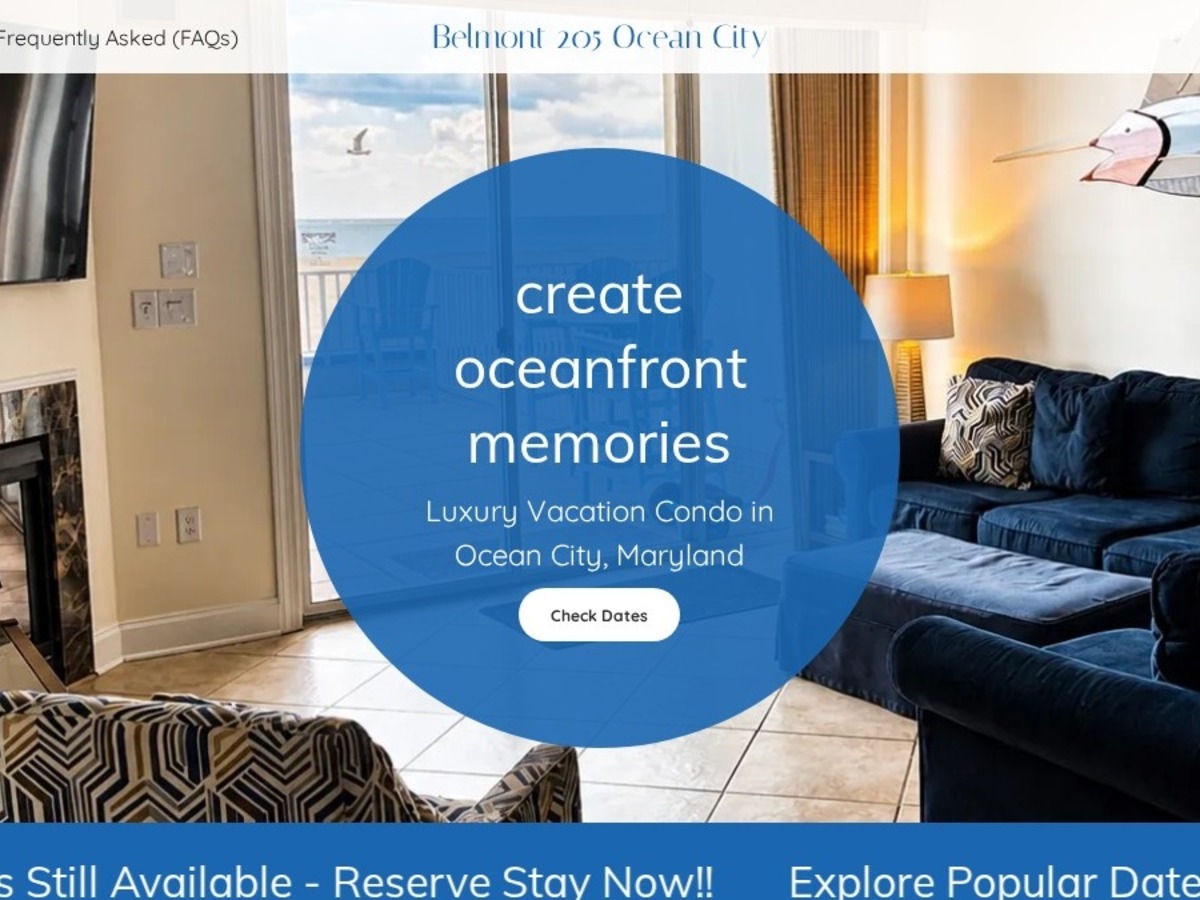
Homepage — availability up front
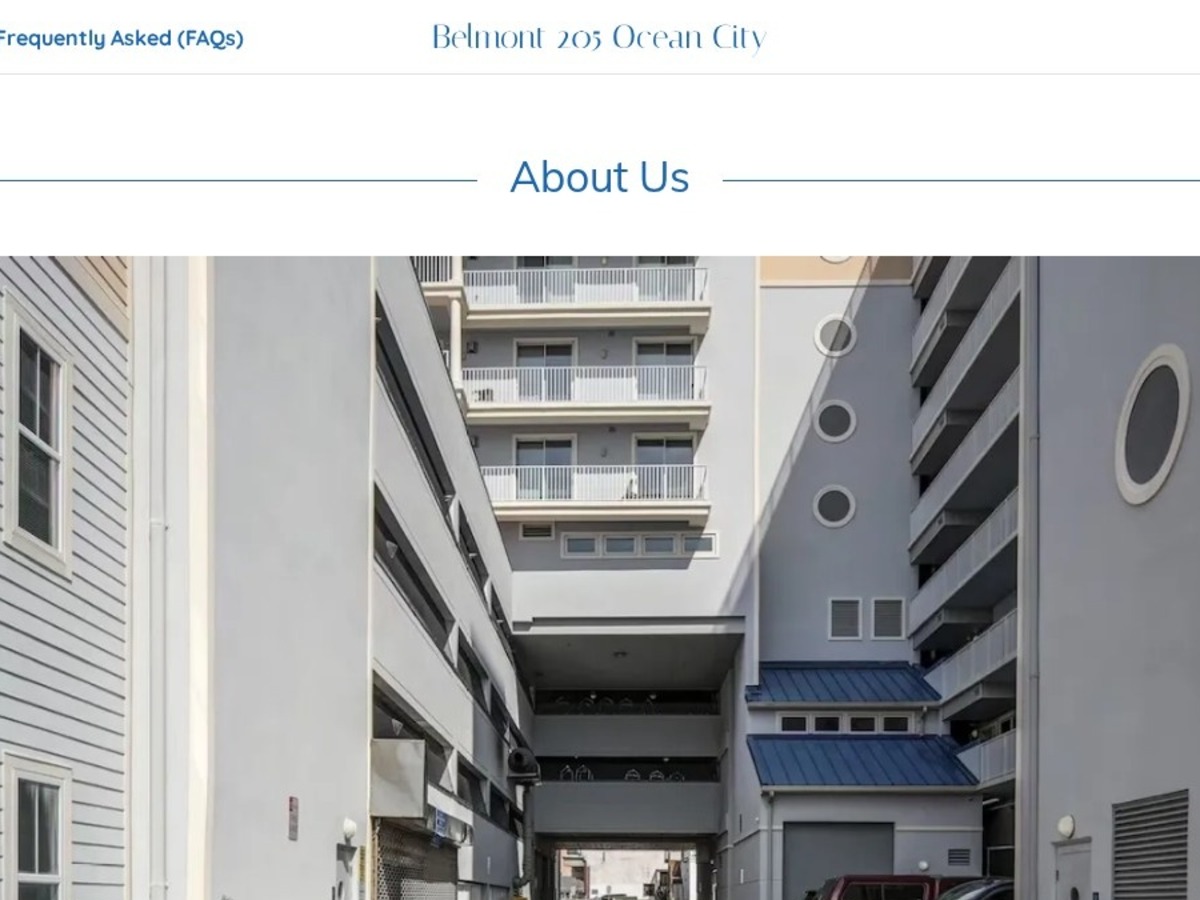
FAQ — objections answered early
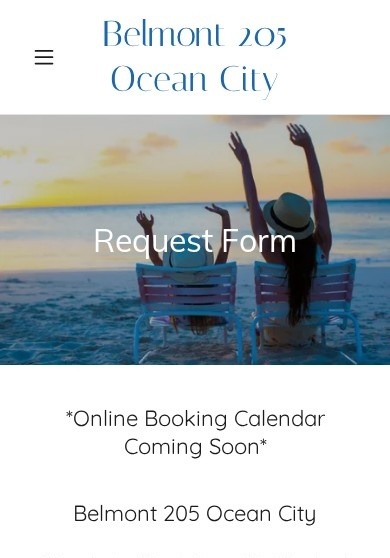
Mobile — check dates to enquiry
Case Study 03
TCO Services
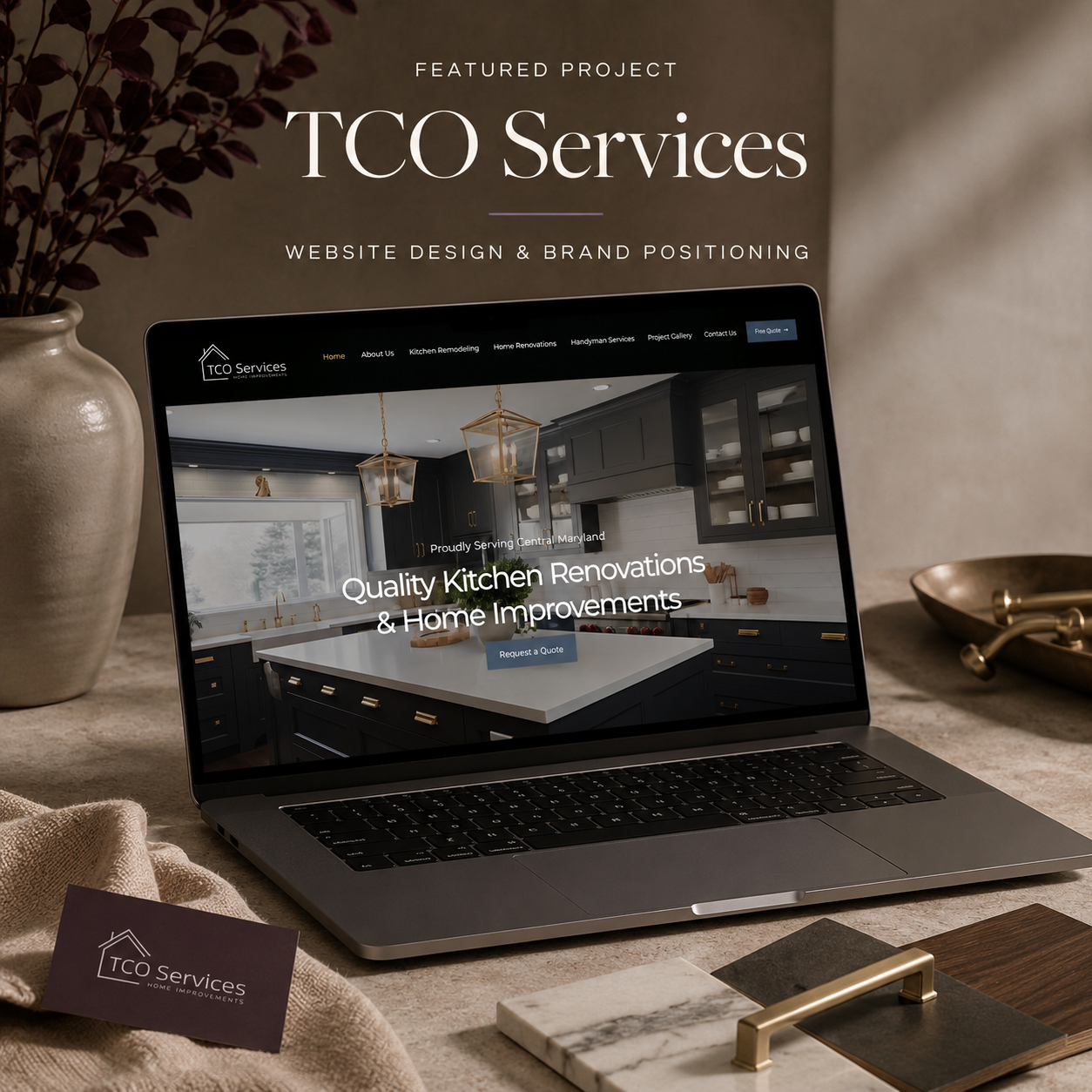
Making a licensed, family-run renovation company read like the most established name in the county.
The Challenge
TCO does beautiful kitchen work, but homeowners searching kitchen remodeling near me were meeting national lead-generation sites and big-box showrooms first. The craftsmanship was already there. The signal that said these people are licensed, organized, and will show up on Tuesday was not.
What I Built
A positioning line to build everything on — A better way to renovate — and then a site that proves it. Three distinct service paths so kitchen remodeling, home renovations and handyman work each own a page and a search intent. A real project gallery instead of stock kitchens. The counties named out loud. A quote request never more than one scroll away. And the owner forward, by name, because in the trades people hire a person, not a company.
Why It Works
Homeowners are not shopping for design — they are shopping for reassurance. Warm neutrals, brass and stone, clean typography and a lot of white space read as organized, which is exactly the promise the business is making. Every page ends with the one thing a homeowner is actually ready to do next: ask for a number.
A site that looks established, speaks to the counties where the work is, and turns local searches into quote requests.
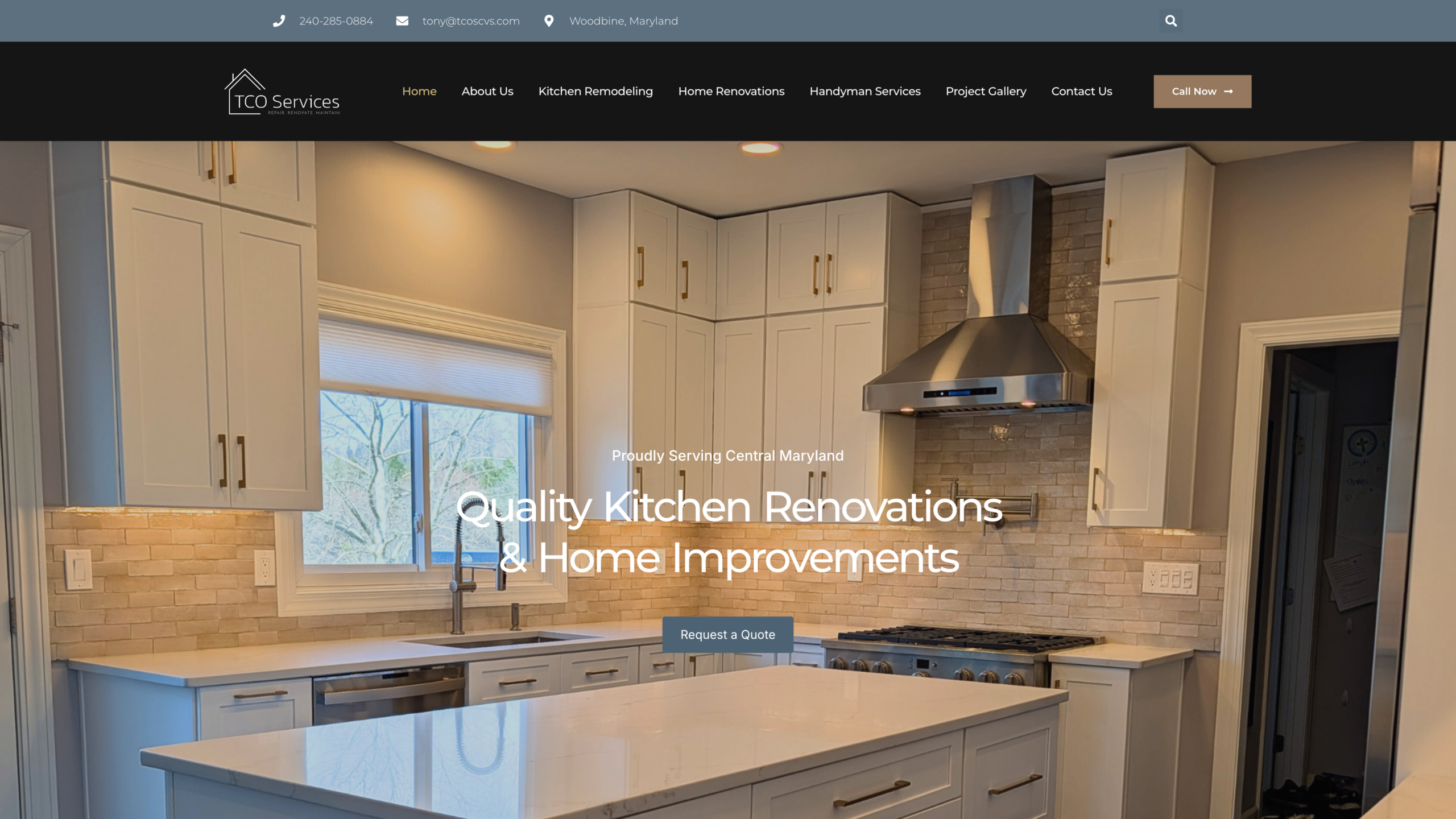
Homepage — quote request in reach
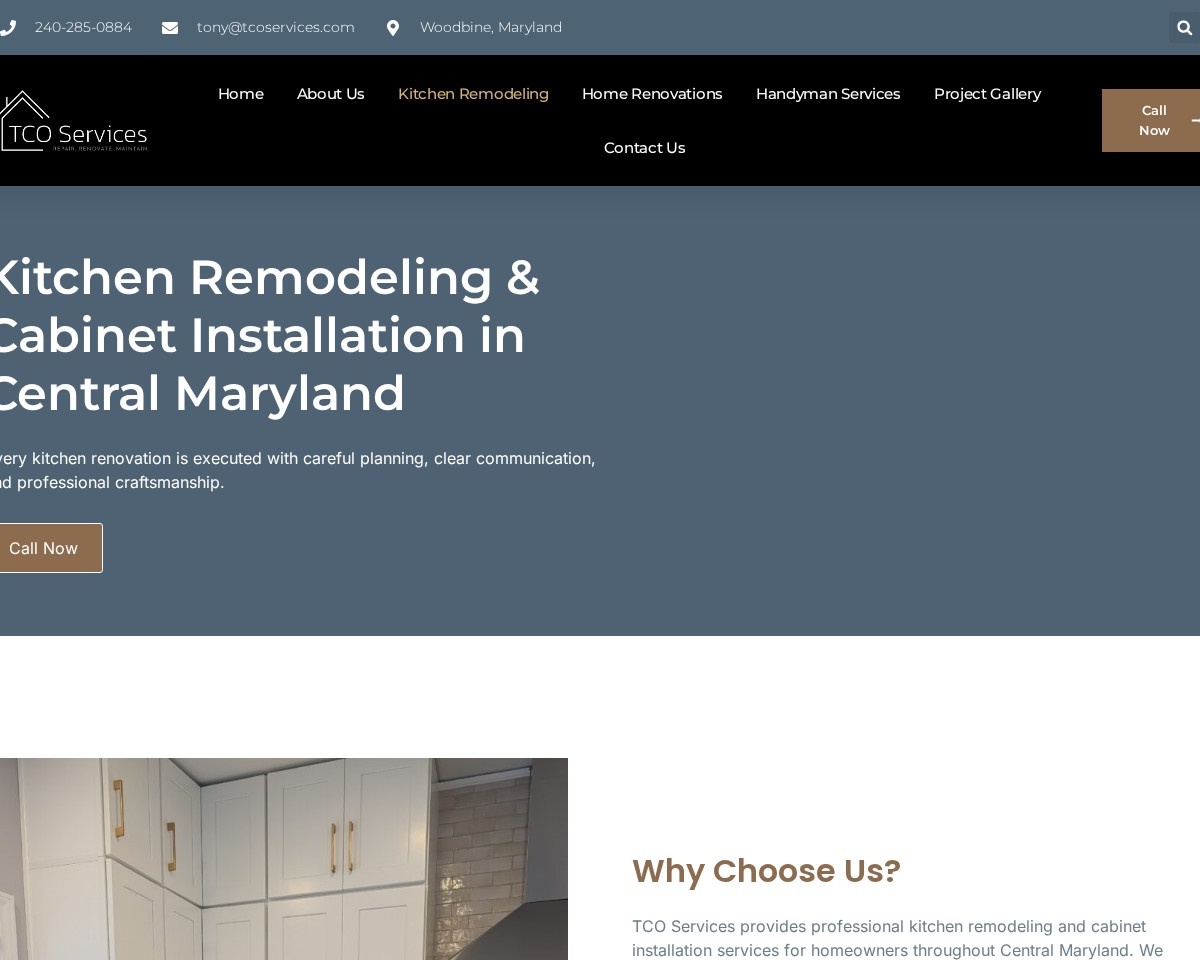
Kitchen remodeling — one page, one intent
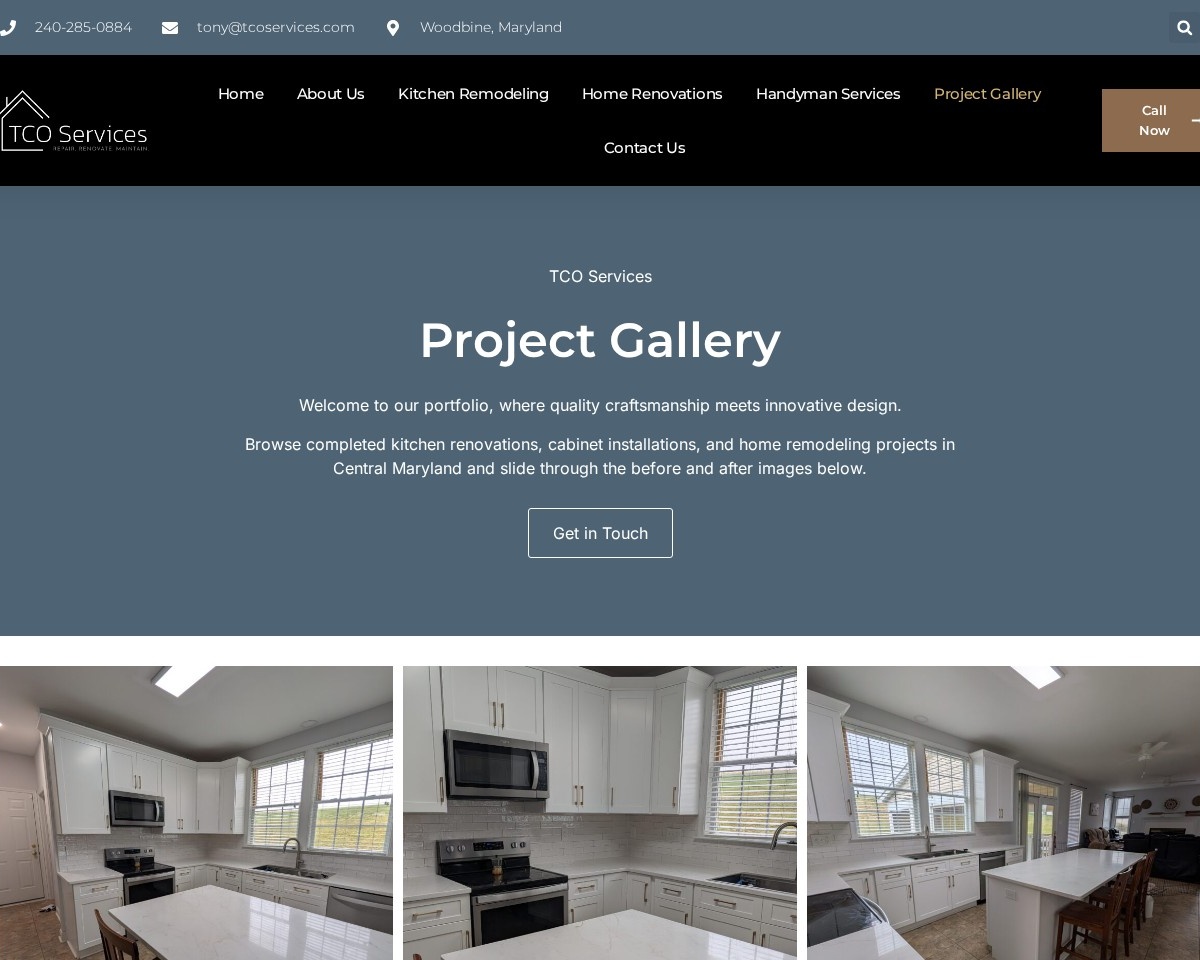
Project gallery — real work, not stock
How a SizzlePop project runs
Every project follows the same four steps, in this order.
Design decisions are cheap before they are built and expensive afterwards. Positioning comes first for that reason.
Positioning
Before a single layout, we find the sentence your business is actually selling — and who it is being said to.
Art Direction
Type, palette, photography, and the feel of the first three seconds. Approved before anything is built.
Build
Custom WordPress, structured so search engines understand it and so you can update it without calling me.
Everything Around It
Copy, photography, Google Business Profile, signage, print — all matching, all launched together.
Next
Let's Create Something Extraordinary
If your business is better than your website makes it look, that gap is costing you the client who was almost ready. Let's close it.
Book a free consultation