For established contractors & home service companies

Your work is finish‑grade.
Your website is still framing.

Websites, branding and marketing for companies that grew faster than the way they look. Built by one creative director — the same one behind TCO Services and HomePro Cabinets.

I'll tell you the three things I'd change. No deck, no call required.

tcoservices.com
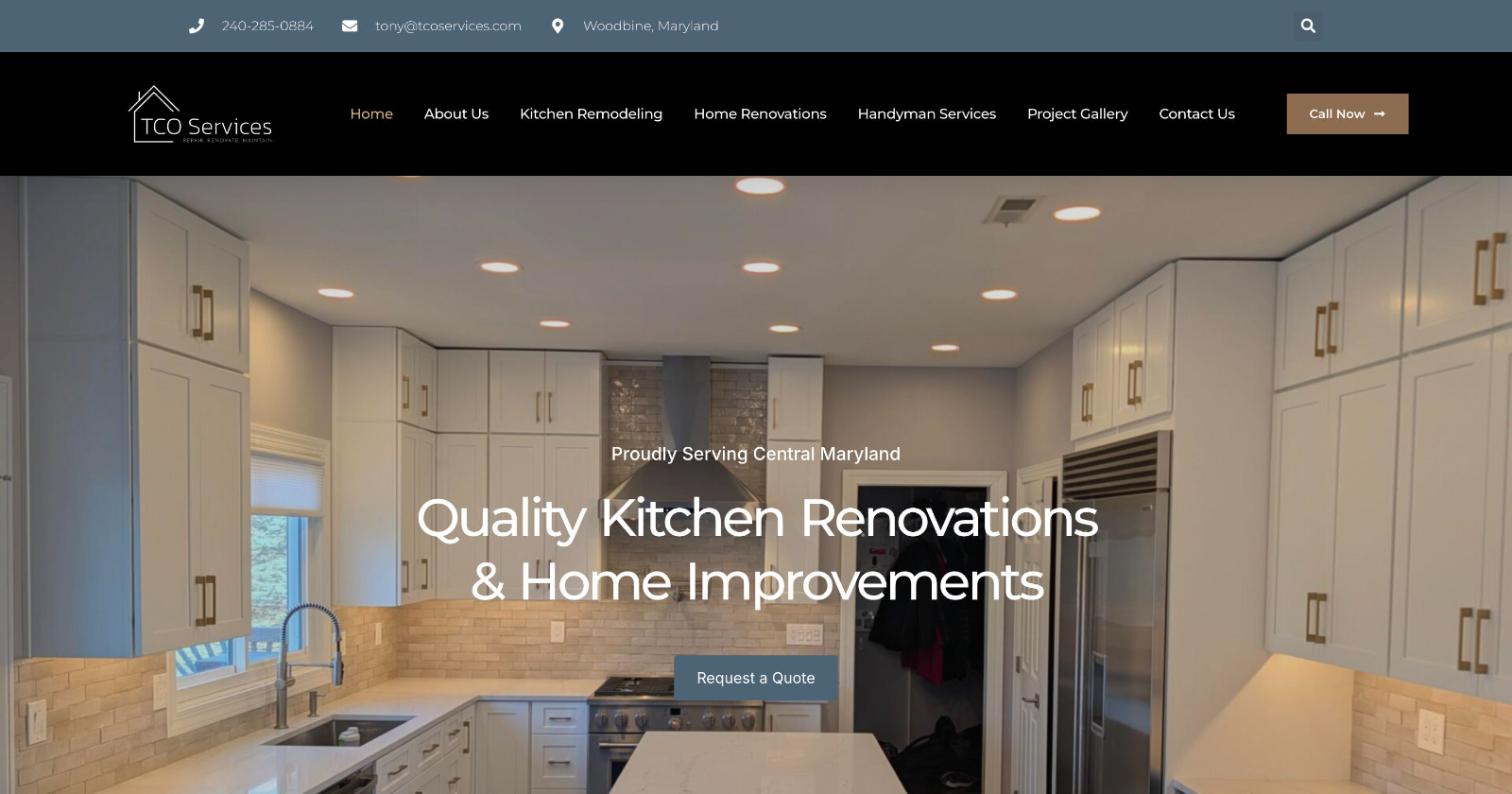
The TCO Services website homepage, designed by SizzlePop Creative, showing a kitchen renovation and a request-a-quote button.

The gap

You already know which of these are true.

Not one of them is a reflection of how you build.

  • Your website was built in 2016, and you've been meaning to redo it since 2021.
  • Your logo exists in four slightly different versions and nobody's sure which is right.
  • Your best work lives on a phone, not on your website.
  • A newer company with half your crew shows up above you on Google.
  • Your truck, your business card and your website look like three different companies.
  • The last person who "did your marketing" sent a report you never opened.

It's not a craftsmanship problem. It's that nobody's job was to look after it.

What changes

Same company. Different first impression.

A website from three phones ago
A site that looks like the company you actually run
Four versions of your logo
One identity, used the same way everywhere
Word of mouth, and nothing else
Inquiries that arrive without a referral attached
Posting when you happen to remember
A steady presence you don't have to think about
You, doing it at ten o'clock at night
Someone whose actual job it is

Relevant work

Two Maryland trade companies. Same problem, different shape.

Both had real crews, real customers and real reviews. Neither needed a rebrand. They needed the outside to match the inside.

tcoservices.com
TCO Services website homepage designed by SizzlePop Creative.

TCO Services

SectorKitchen & bath remodeling
BasedWoodbine, Maryland
ScopeWebsite, positioning, local search

The problem

The craftsmanship was there. But a homeowner searching locally hit national lead-generation platforms and big-box retailers first, and nothing online signalled that TCO was an organized, established company you could hand a kitchen to.

What I changed

Gave the company a point of view — "a better way to renovate" — and built the site around it. Three service pages shaped by what people actually search for: kitchen remodeling, home renovations, handyman work. A gallery of real finished projects instead of stock photography. The counties they serve named on the page. A quote request in reach on every screen, and the owner's face on the site so it reads as a business run by a person.

Why it works

Warm neutrals, brass and stone, and a lot of room to breathe. The site looks organized because organized is the promise the business is making.
homeprocabinets.com
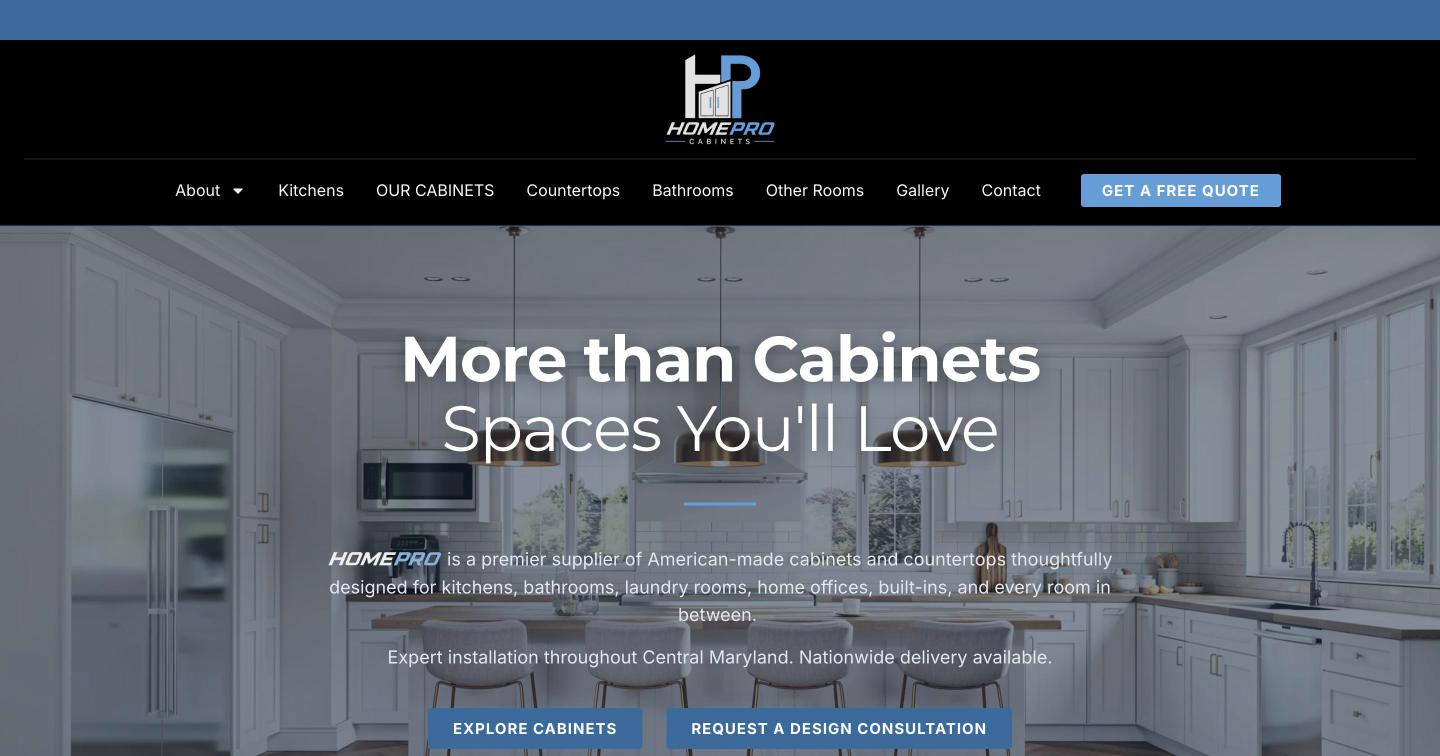
HomePro Cabinets website homepage worked on by SizzlePop Creative.

HomePro Cabinets

SectorCabinetry, countertops & remodeling
BasedWoodbine, Maryland
ScopeSite structure, search foundations

The problem

An authorized Fabuwood dealer that runs entire kitchen remodels — cabinetry, countertops, backsplash, flooring, appliances, structural work — but read online like a cabinet supplier. The full scope of what they do wasn't visible to anyone who hadn't already walked into the showroom.

What I changed

Rebuilt the structure around how customers actually shop — by room and by material, not by internal category. Put the search foundations in properly: clean URLs, redirects that don't break, a working sitemap, analytics that report something real. Named the counties served. Brought the reviews onto the page instead of leaving them on Google.

Why it works

The full scope of the business is legible from the homepage now, and the pages people actually search for exist and can be found. For a company like this, structure does more than a new coat of paint.

What I do

Four things, in the order most companies need them.

Most start with the first. Some only ever need the first. Nothing here is a package you have to buy whole.

01 — Look the part

Website & brand refresh

A custom WordPress site built around how customers actually decide — not a template with your logo dropped in. Logo cleanup or a full identity, then applied consistently to everything that carries your name.

Typically includesSite design & build · copy · photography direction · logo & brand system · print and vehicle-ready files

02 — Get found

Search & local presence

Structure a search engine can read, service pages built on what people in your area actually type, and a Google Business Profile that's genuinely filled out. The unglamorous work that makes the phone ring.

Typically includesSite structure & on-page SEO · service-area pages · Google Business Profile · review strategy · analytics you can actually read

03 — Stay visible

Social & ongoing content

Your finished jobs, shot and posted with intent, on a schedule you don't have to hold in your head. Enough that customers see you between projects, not so much that it becomes another job.

Typically includesContent direction · post design · monthly calendar · captions · profile design

04 — Keep it consistent

Ongoing creative direction

Everything else that comes up: a flyer, a proposal template, an estimate cover, a new truck, a booth for the home show, a hiring post. One person who already knows your brand and doesn't need re-briefing.

Typically includesCollateral · presentations · signage & vehicle graphics · ad creative · on-call design

The difference

One creative director. No account manager, no queue.

  • You talk to the person doing the work. Not an account executive relaying your notes to a designer you'll never meet.
  • Your text gets answered the same day — usually within the hour. You're not ticket number four in someone's sprint.
  • Nothing gets handed down to a junior. The person who pitched it is the person who builds it, start to finish.
  • I've marketed a remodeling company. I know what a change order is, what your busy season does to your calendar, and why the "before" photos are always terrible.
  • The site is yours. Custom WordPress, on your hosting, in your name. If we stop working together you keep every piece of it.

How it goes

Five steps. The first one takes you about a minute.

  1. Show me what you've got

    Send me the link to your site. That's the entire first step — no forms to fill out, no discovery call to schedule.

  2. I tell you what's holding it back

    A short, specific list of what I'd change and why. Not a proposal deck. If it's a small fix, I'll tell you that too.

  3. We rebuild what matters

    Usually the site and the identity. Often less than you'd expect — the goal is the result, not the invoice.

  4. Launch

    On your hosting, in your name, documented, with the analytics actually connected so you can see what it's doing.

  5. Ongoing support, if you want it

    Social, collateral, and whatever comes up. Month to month — no annual contract to get out of.

Start here

Send me your website. I'll tell you what I'd change.

No deck, no discovery call unless you want one. If it's a small fix, I'll say so — I'd rather tell you the truth than sell you a rebuild.